Mega Doctor News

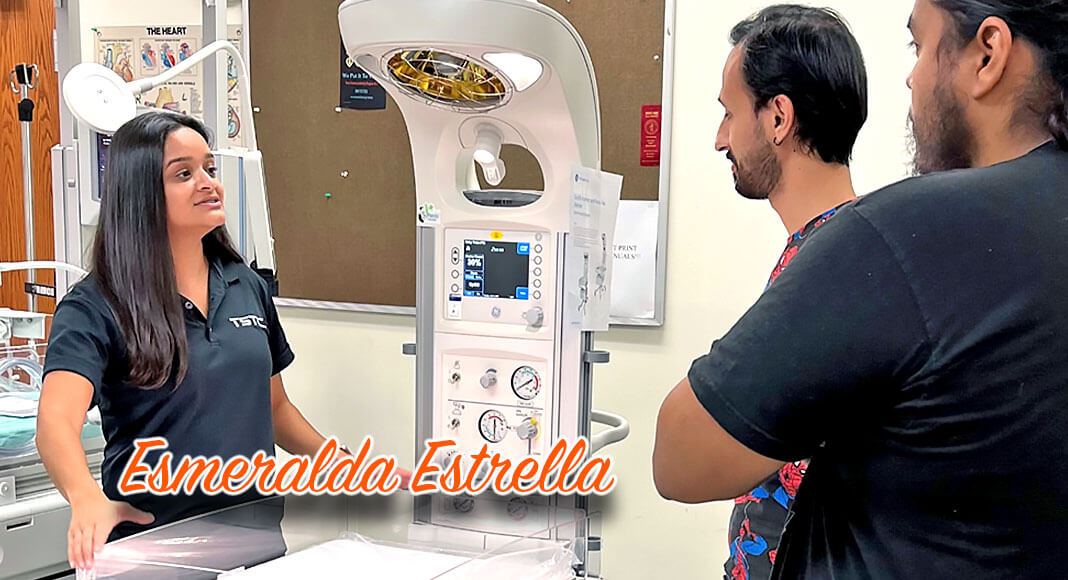
HARLINGEN, Texas – Texas State Technical College Biomedical Equipment Technology alumna Esmeralda Estrella developed a strong interest in helping people at a young age.
Now she is helping to educate the next generation of biomedical equipment technicians as a new instructor at TSTC.
The San Benito resident was introduced to the technical side of health care through a family friend during her teenage years.

“It piqued my interest because I could still contribute to improving patient care without having direct contact,” Estrella said. “Then I learned about TSTC’s Biomedical Equipment Technology program from recruitment events at San Benito High School.”
That exposure would lead her to a health care education at TSTC’s Harlingen campus, where she earned an Associate of Applied Science degree in Biomedical Equipment Technology in 2018.
In addition to that achievement, Estrella is continuing her education today.
“I am pursuing an Associate of Science degree in Mathematics at TSTC,” she said. “I am also pursuing a Bachelor of Science in Health at the University of Texas Rio Grande Valley in Edinburg. Then I also plan to pursue a Bachelor of Science in Electrical Engineering at UTRGV.”
Estrella began her career at Doctors Hospital at Renaissance (DHR) Health, where she accepted a job as a level I biomedical technician in 2018.
“My duties consisted of analyzing equipment to ensure superior quality and performance,” she said. “I performed preventative maintenance on various machines. I responded to calls about equipment failure from nurses in various departments. I also attended professional development for new equipment that would be utilized in the hospital. It was rewarding to help save lives in a different form.”
The next chapter of her career was at Ace Medical Supply in Port Isabel. She accepted a job there as a part-time service technician in 2019.
“I catered to various clientele in clinics and sports therapy throughout the Rio Grande Valley, San Antonio and Houston areas,” she said. “I analyzed the equipment to ensure quality and performance. And I performed any preventative maintenance that was required.”
Also in 2019, Estrella accepted a job as a full-time lab assistant in the Biomedical Equipment Technology program at TSTC.
“I noticed the beneficial aspects of how medical equipment can save a civilian’s life,” she said. “I realized the students need to understand the importance of resolving technical issues before (the equipment is) sent to a patient’s hospital room. Any patient should be given the utmost care and respect. My objective was to educate those principles into these future biomedical technicians.”
After three years, Estrella learned about a full-time instructor vacancy in the same program and got the job.
“I am thrilled to continue giving back as an instructor,” she said. “My colleagues have given me the opportunity to enhance my skill set. That’s what I love about TSTC.”
Estrella added that educating a new generation of technicians has been riveting.
“When I was a lab assistant, I assisted in many elements of the program,” she said. “Much of that consisted of recruitment at high schools. I also taught a few courses. Now, as an instructor, I get to fully engage with the students. I get to motivate them more by maximizing their potential.”
Ray Longoria, a TSTC Biomedical Equipment Technology lead instructor, said Estrella uses self-reflection to identify the areas in which she can improve as an instructor.
“Esmeralda spends time thinking about how she interacts with her pupils and how she teaches,” Longoria said. “Not only does it increase her understanding of the subject, but it places her in the role of a student. This gives her a perspective on learning that she could otherwise lose when in teaching mode.”
Medical equipment repairers can earn an average annual salary of $47,720 in Texas, according to the U.S. Bureau of Labor Statistics. The number of such jobs in the state is projected to increase 12% by 2028, onetonline.org shows.
TSTC offers an Associate of Applied Science degree in Biomedical Equipment Technology at its Harlingen and Waco campuses.
Registration for the fall semester is underway. For more information, visit tstc.edu.